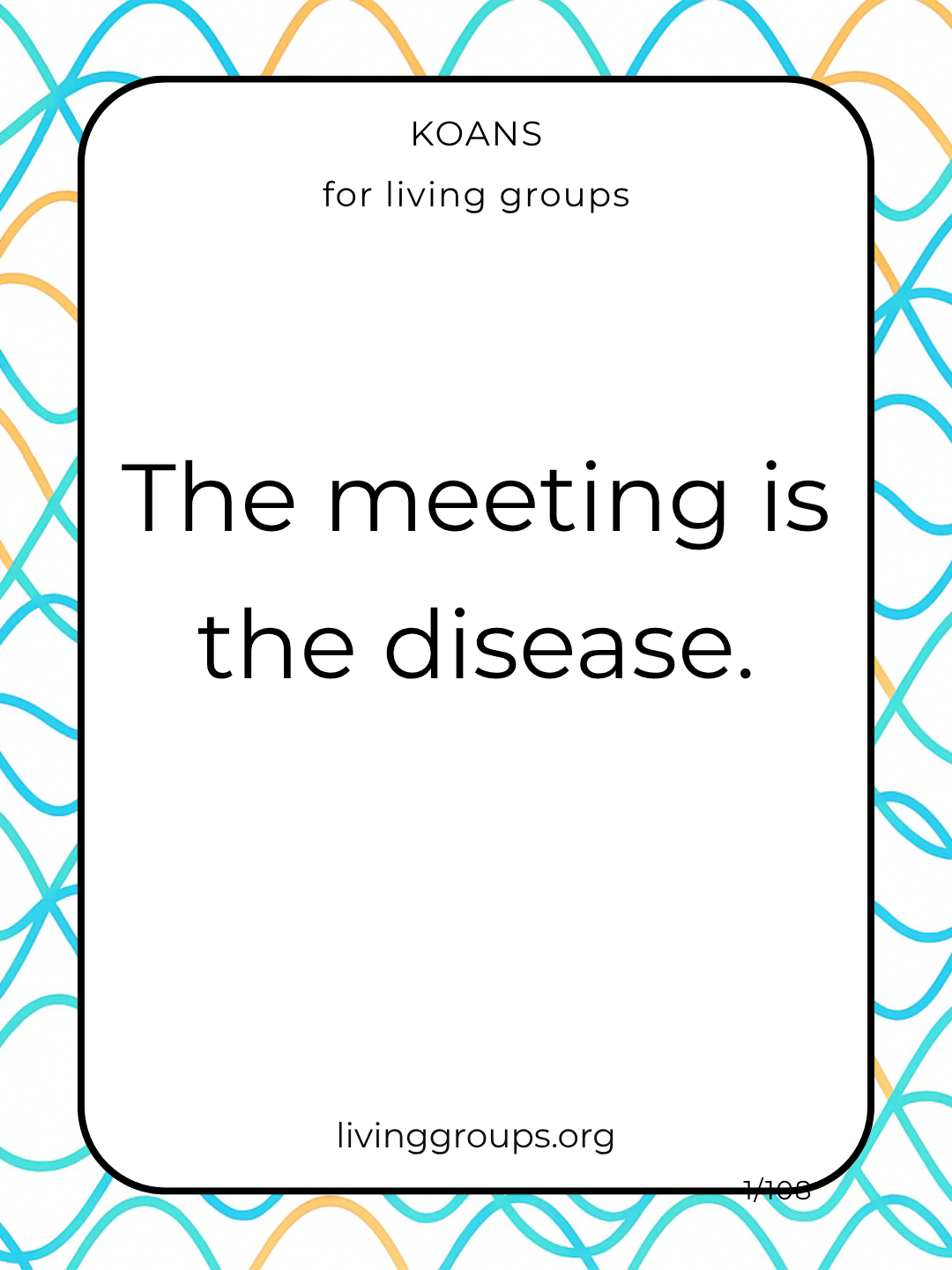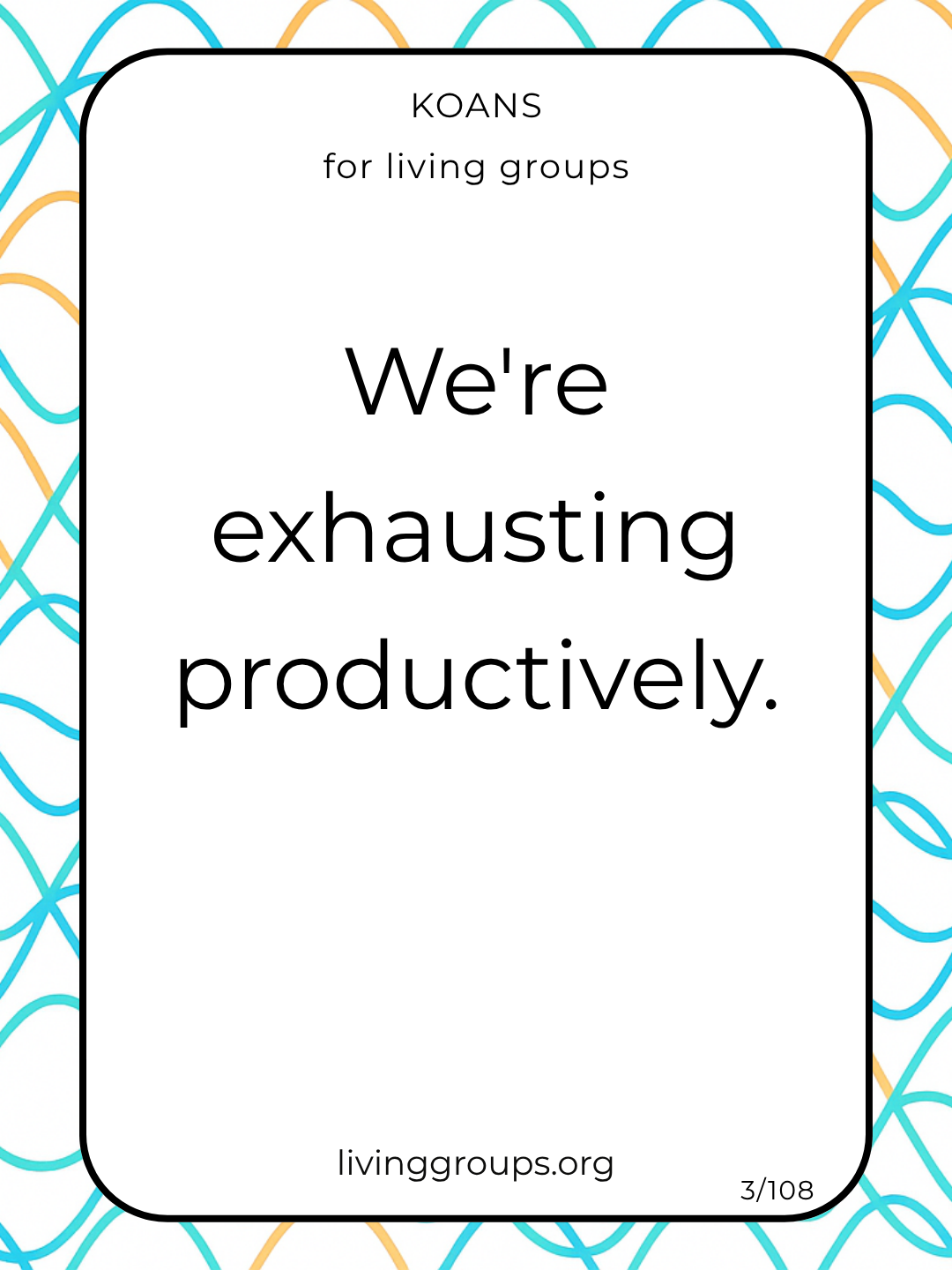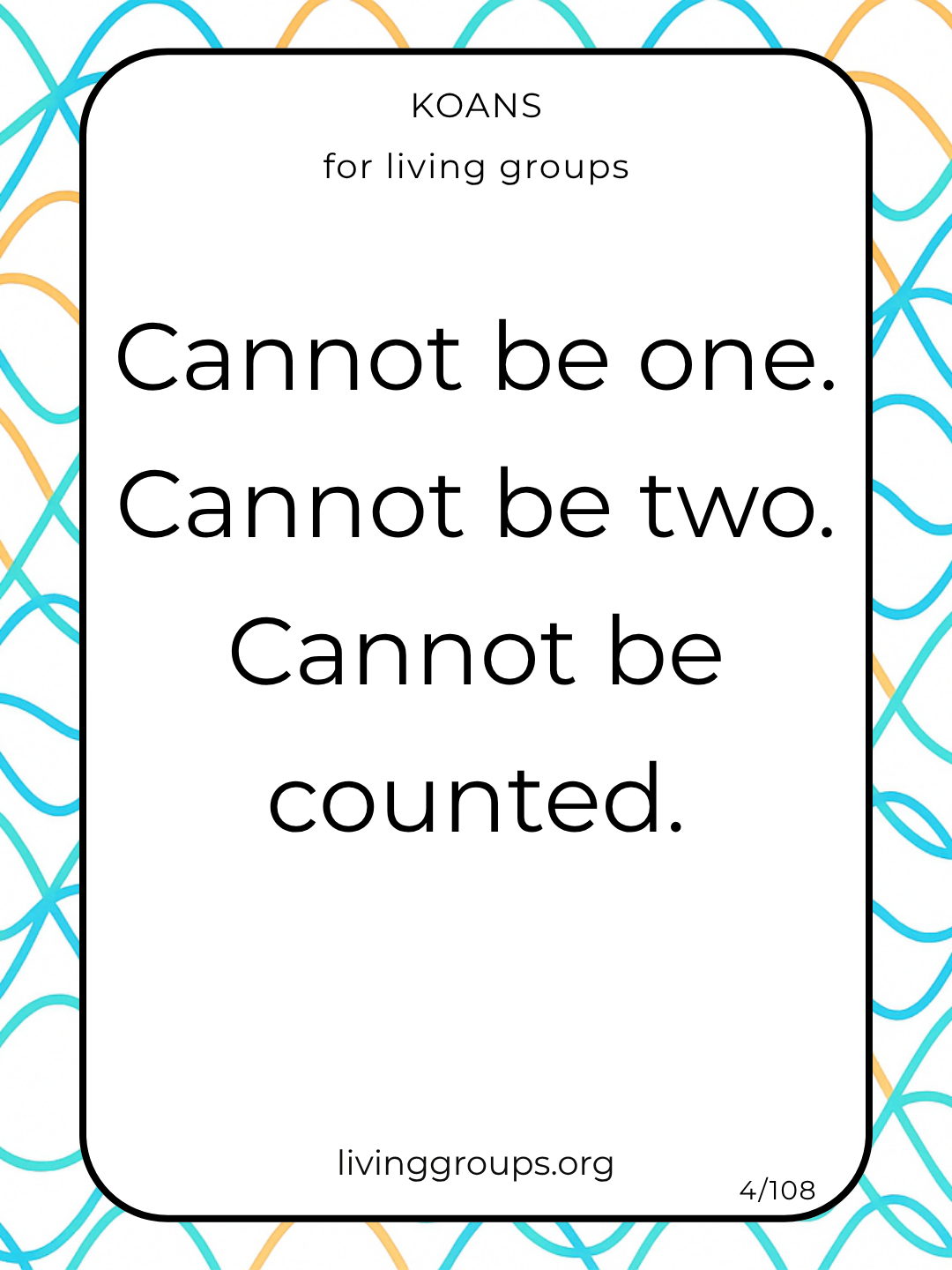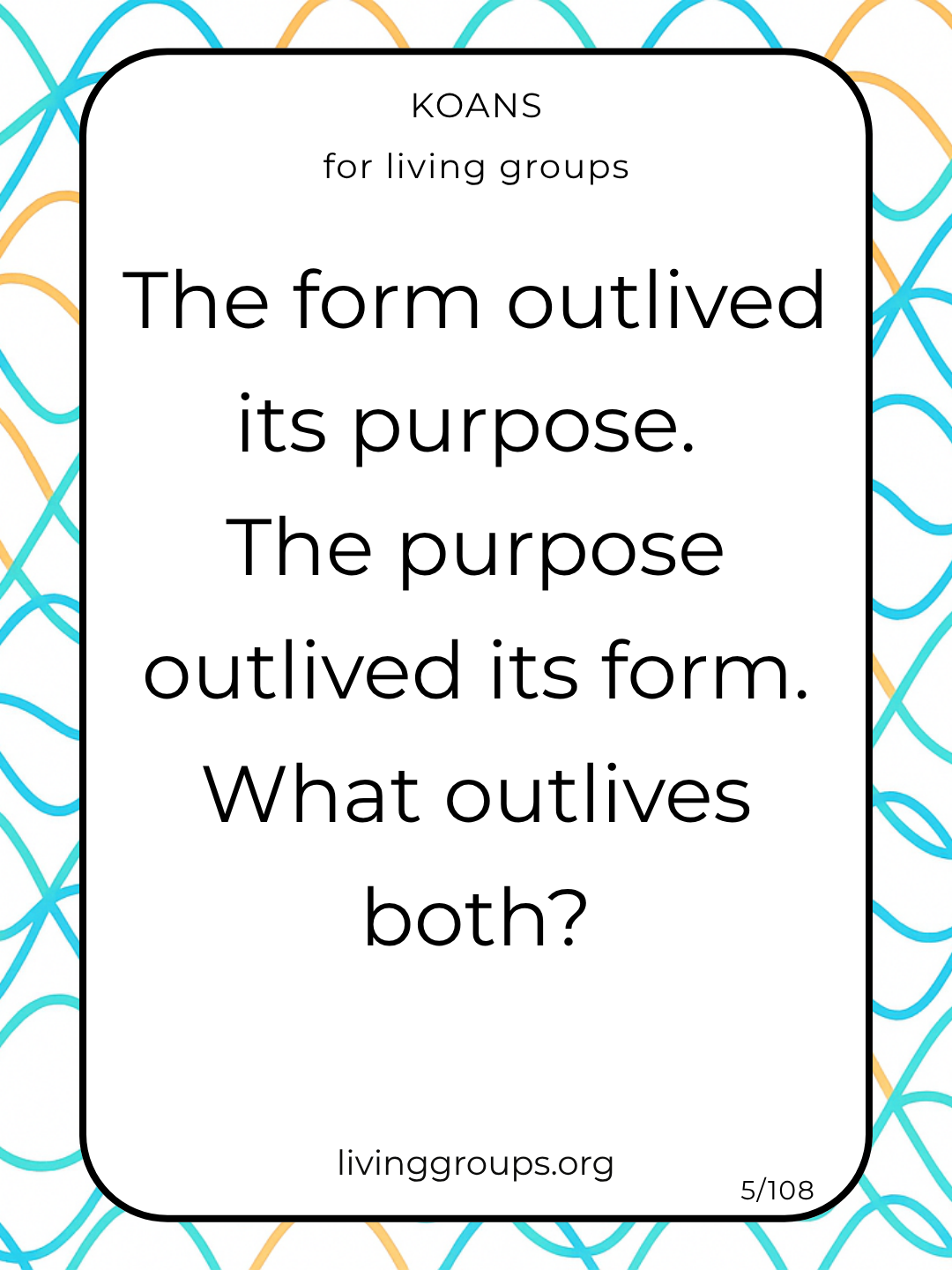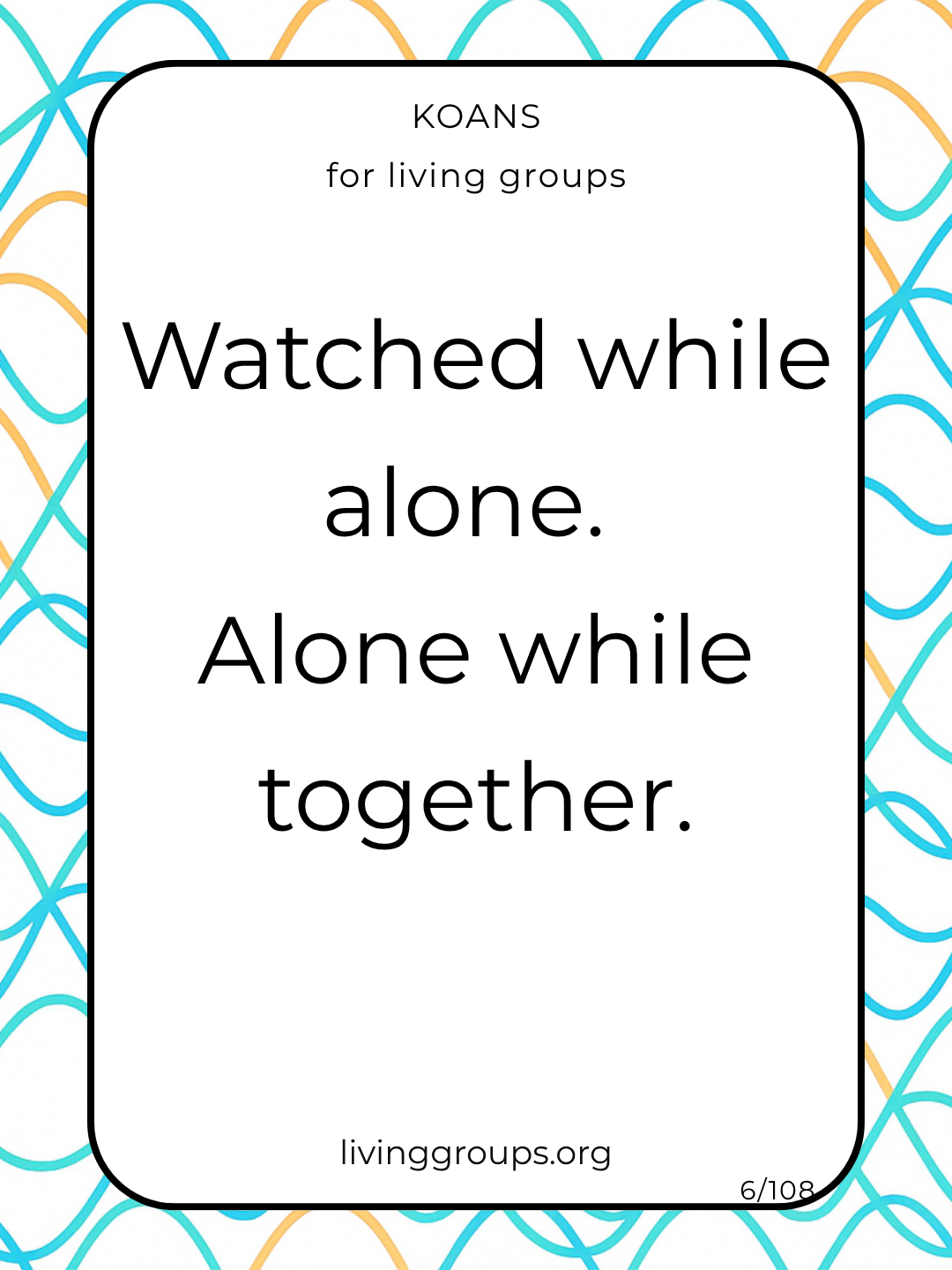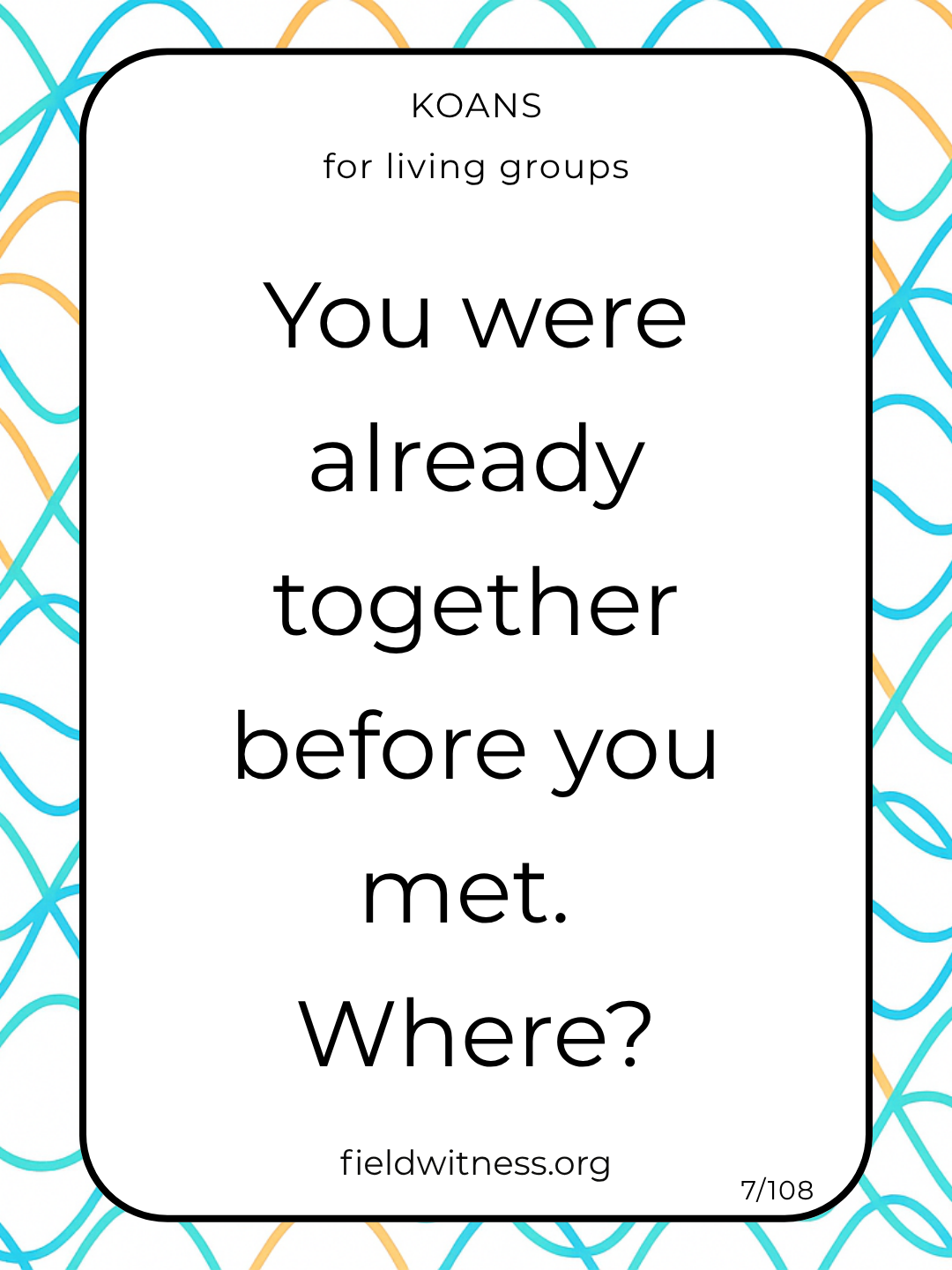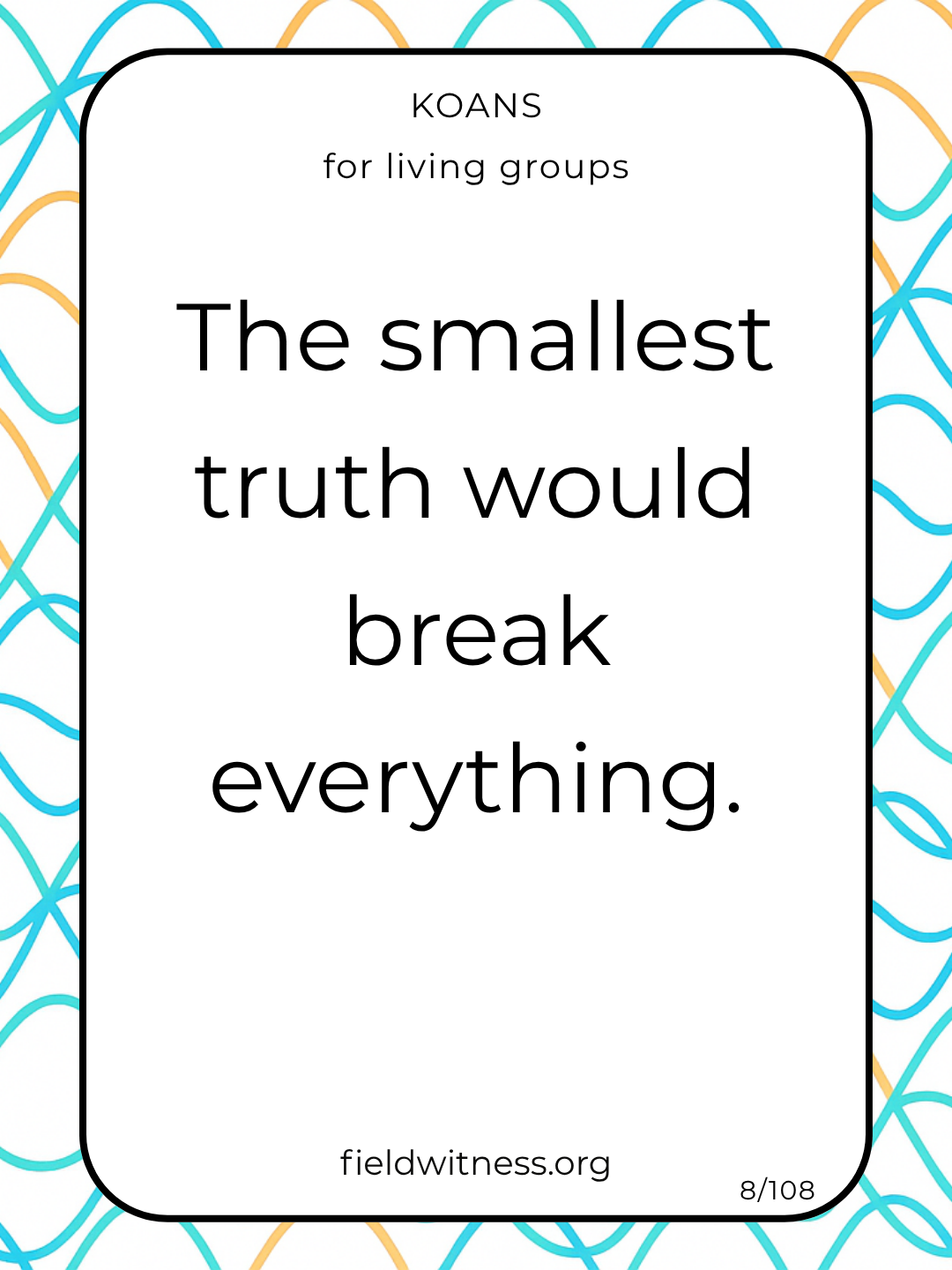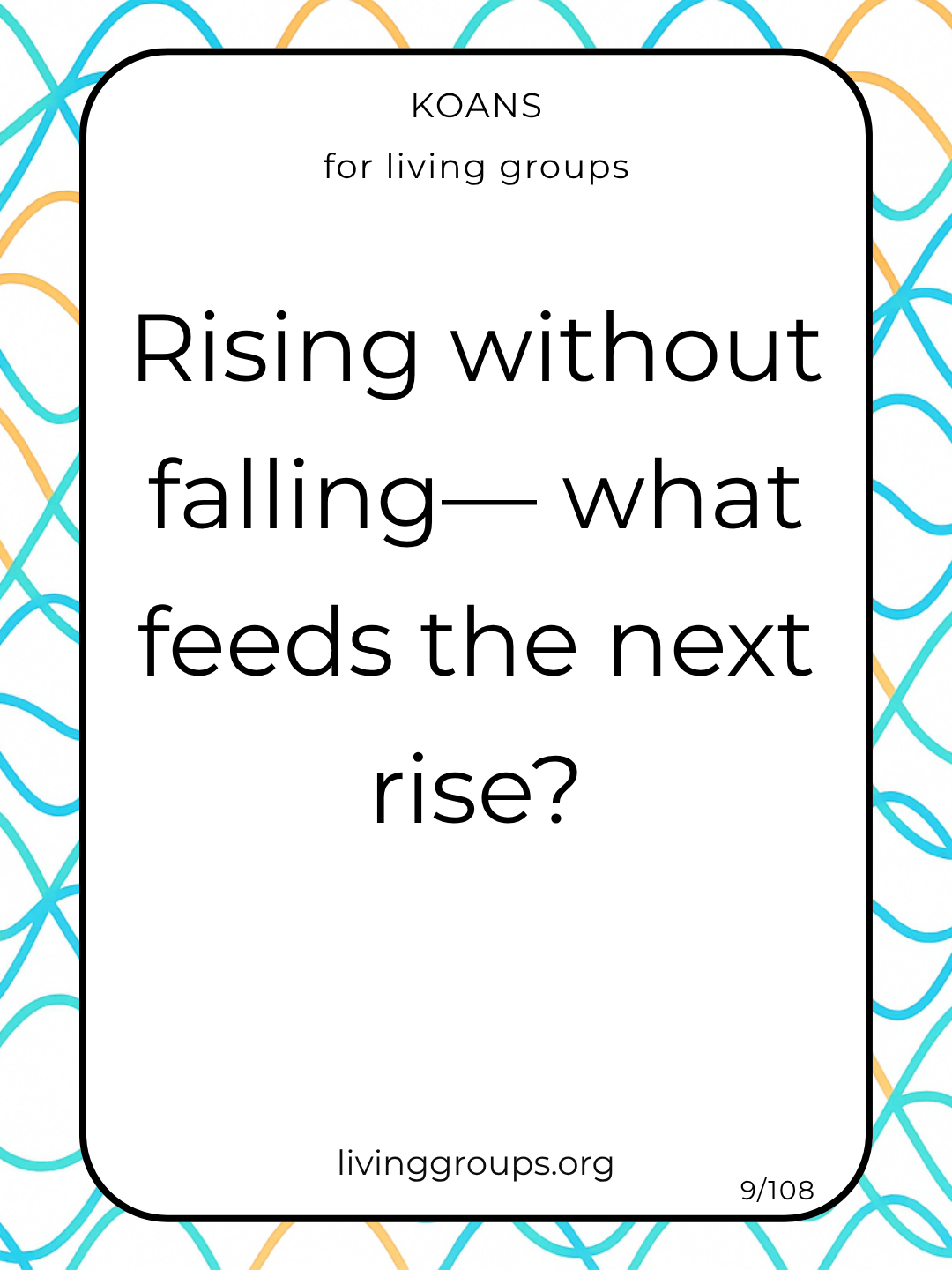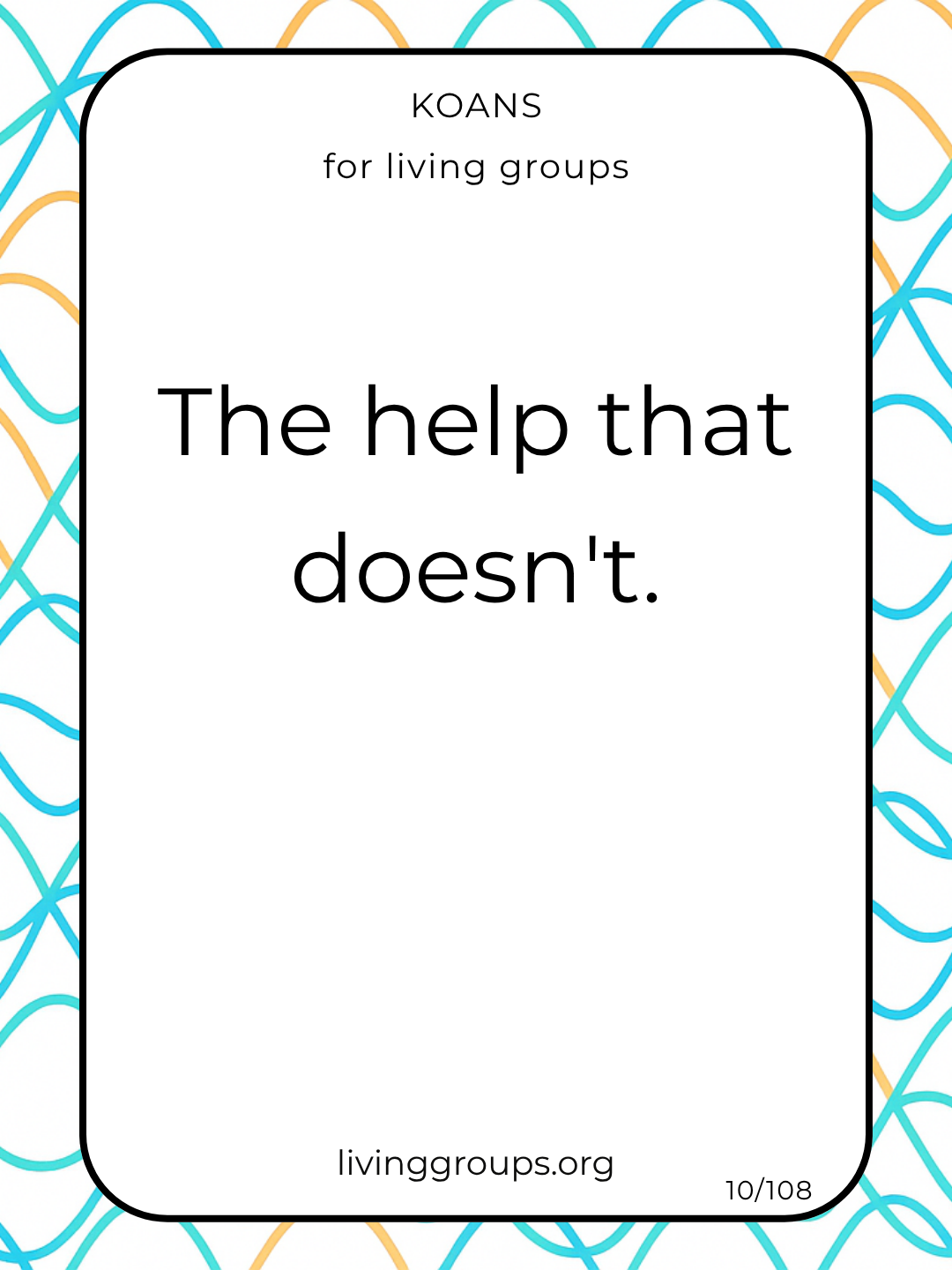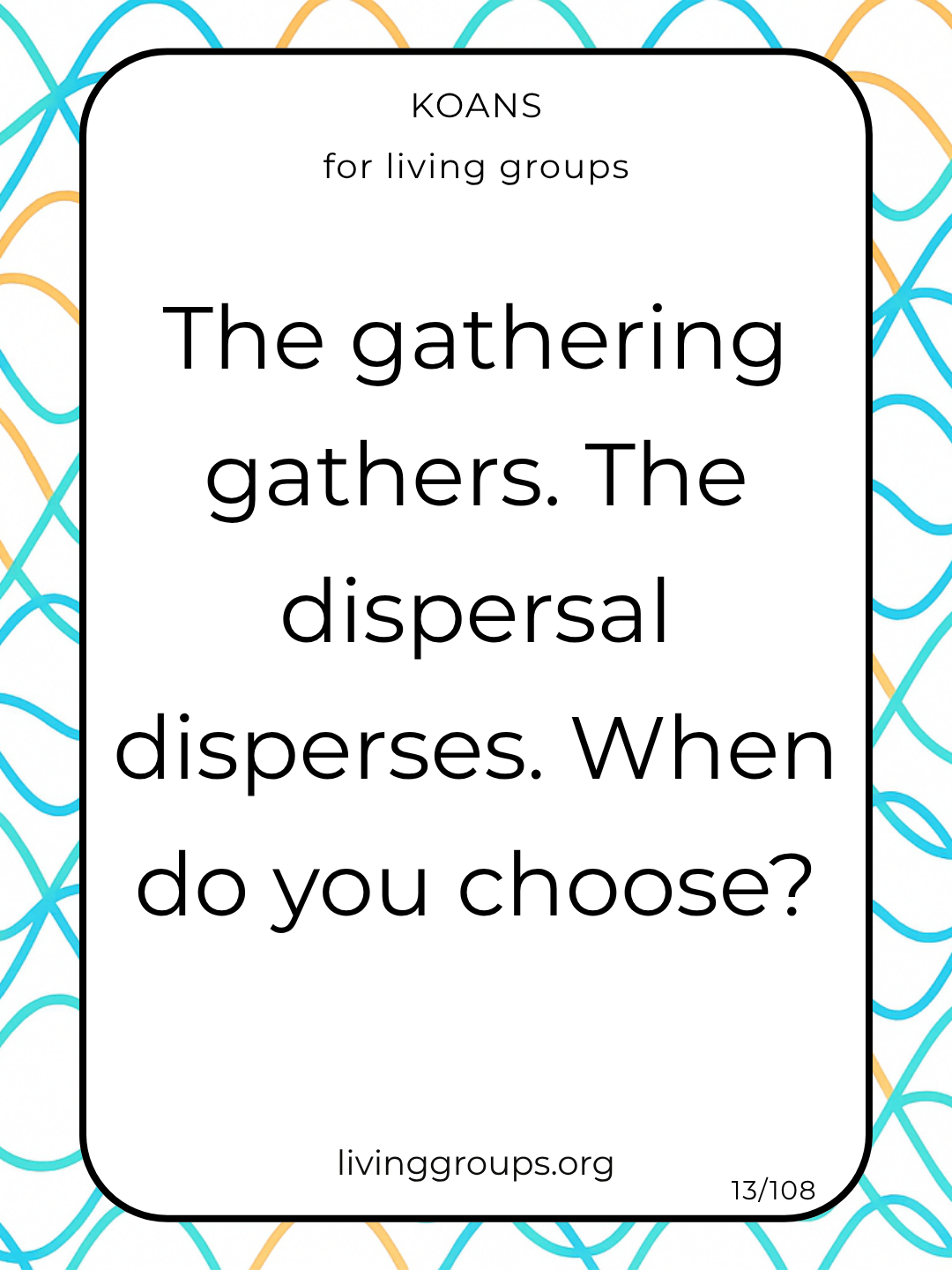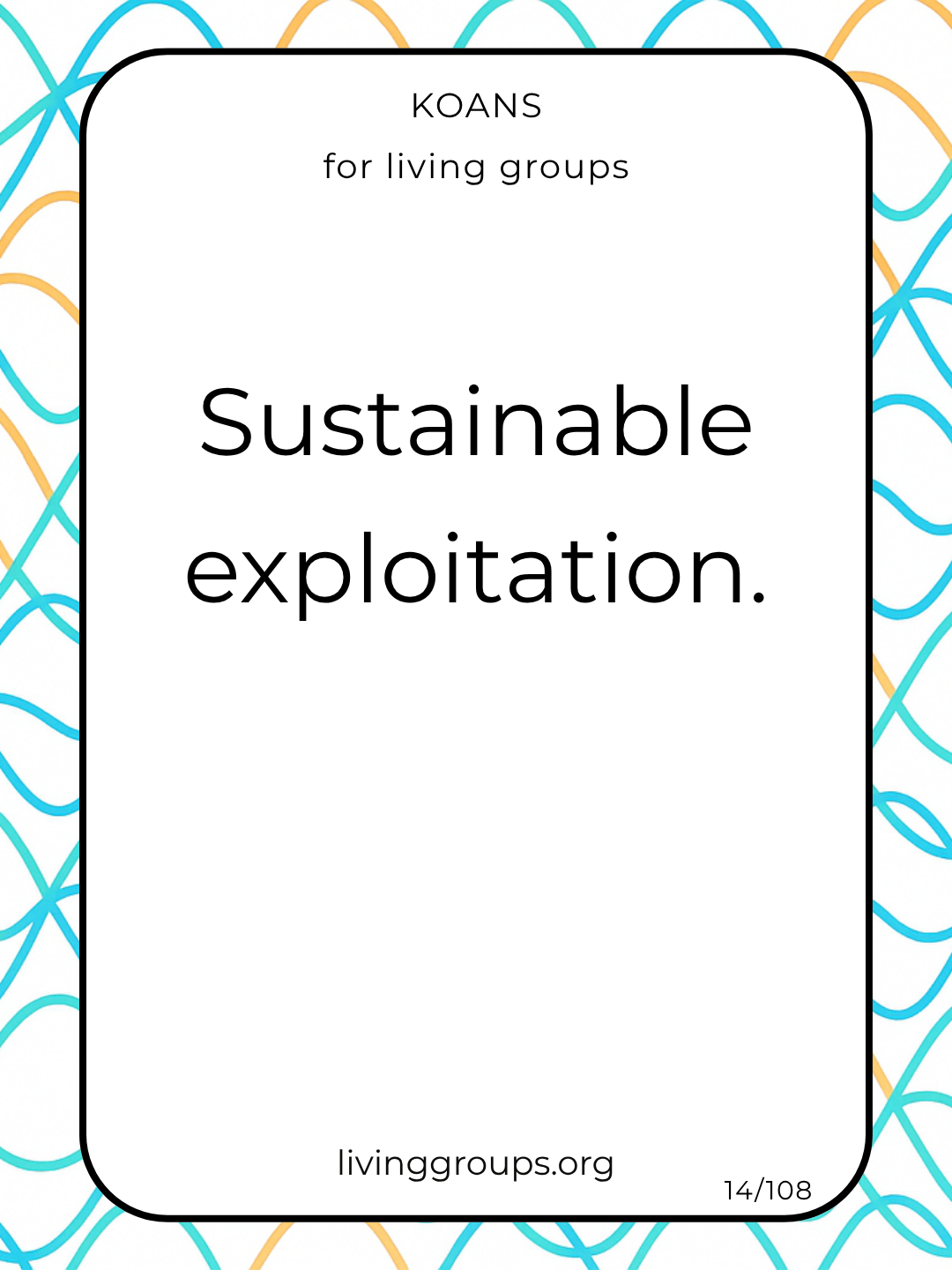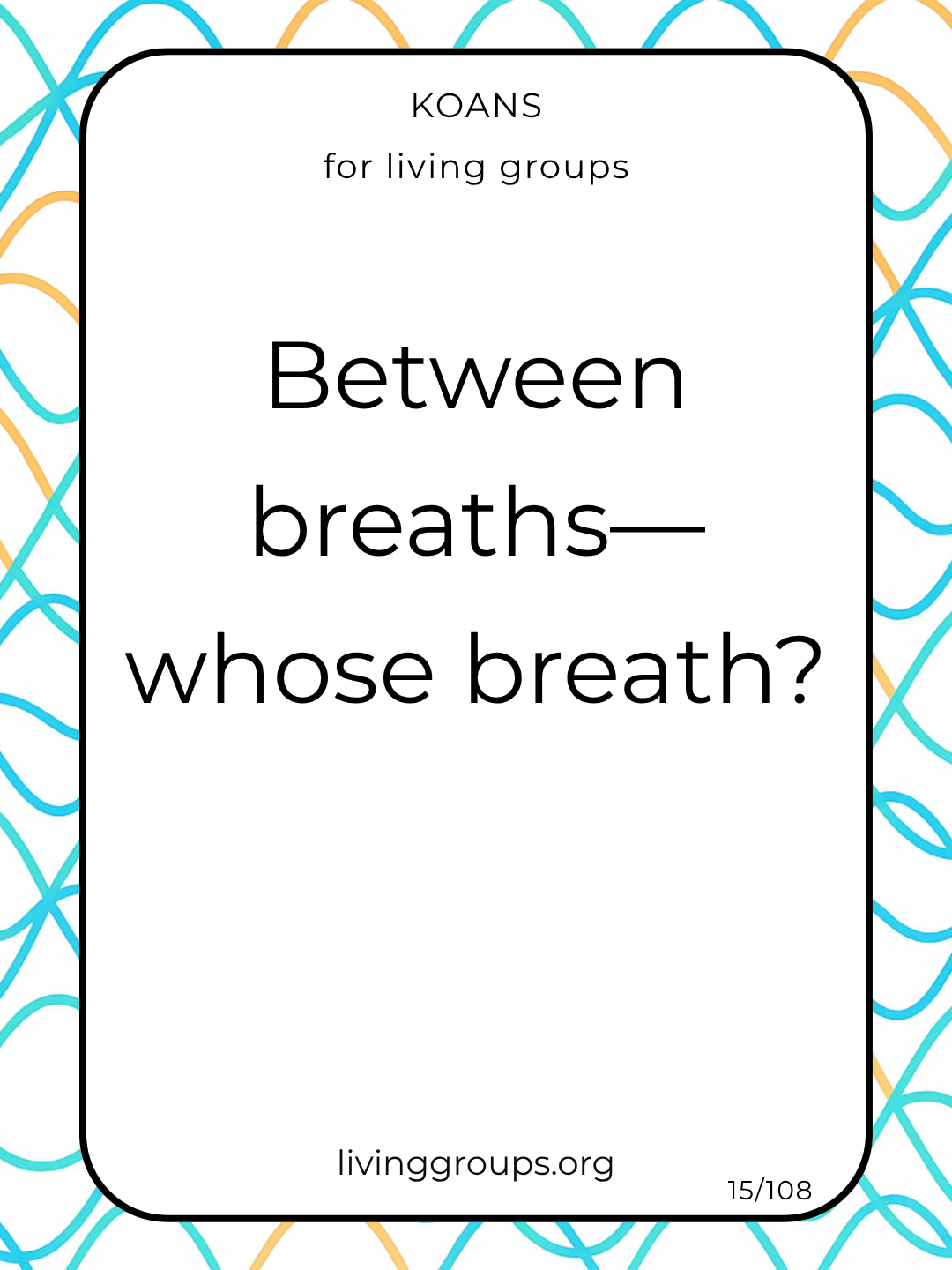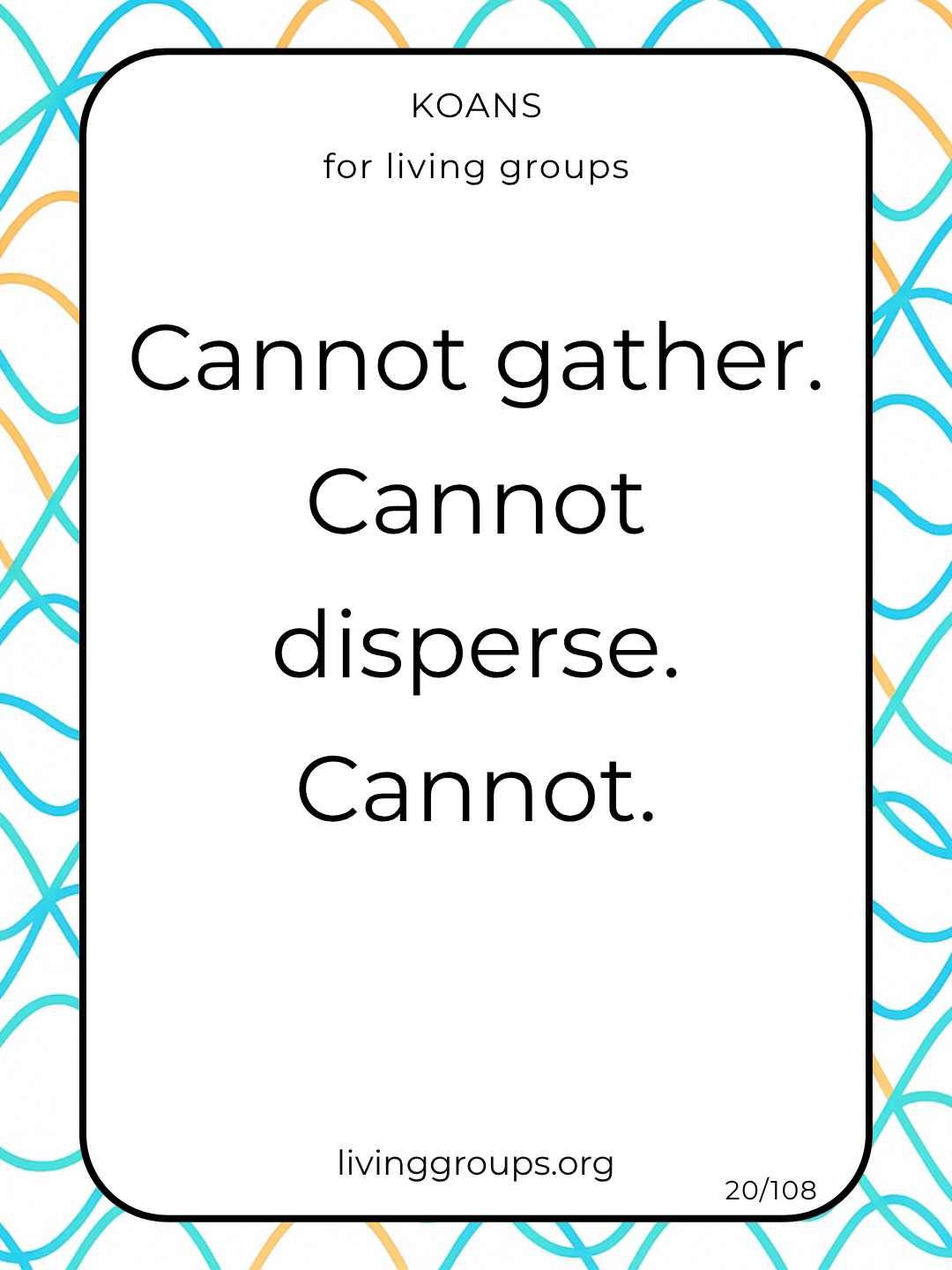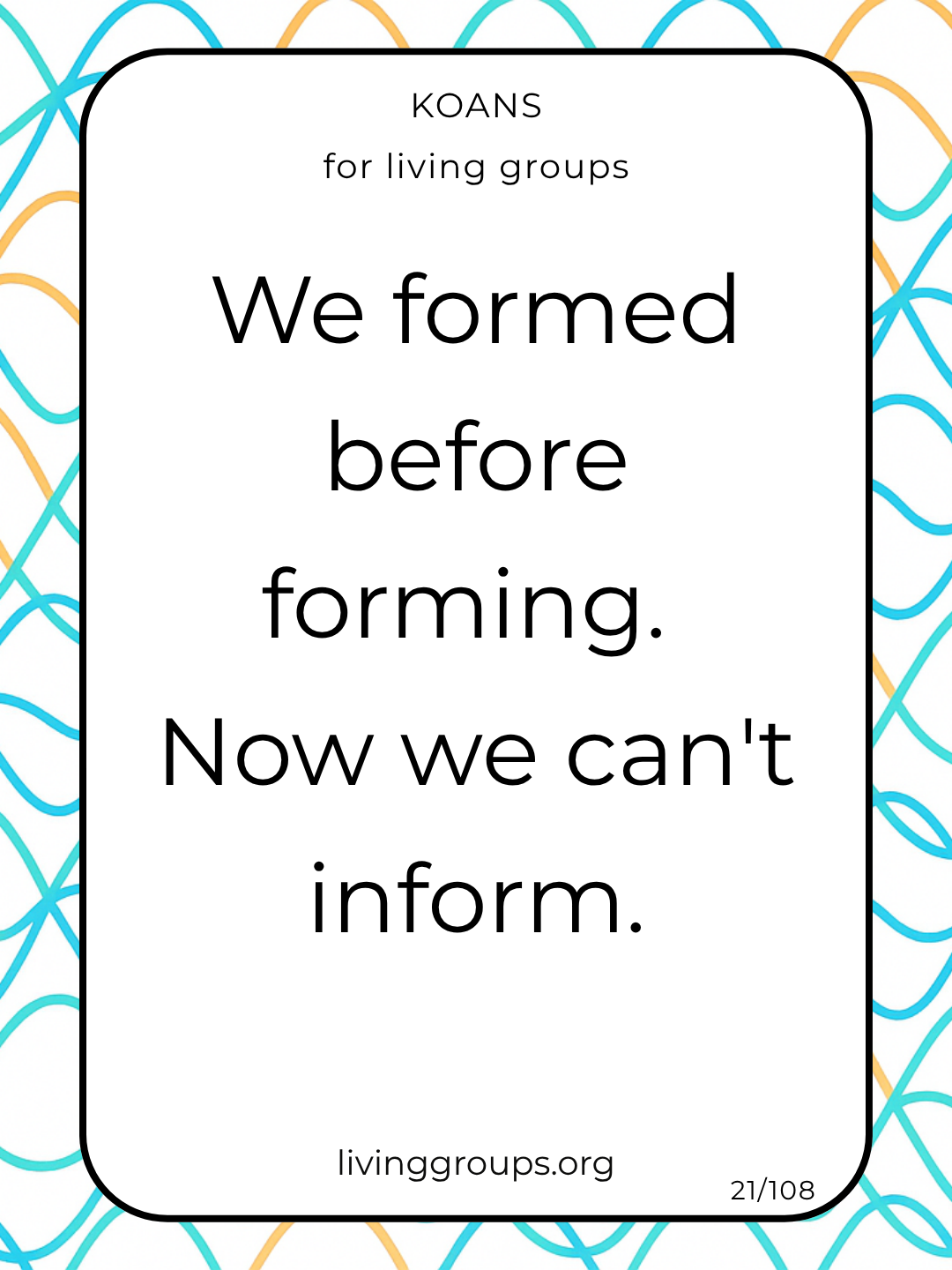

KOANS
for living groups
What Koans Are
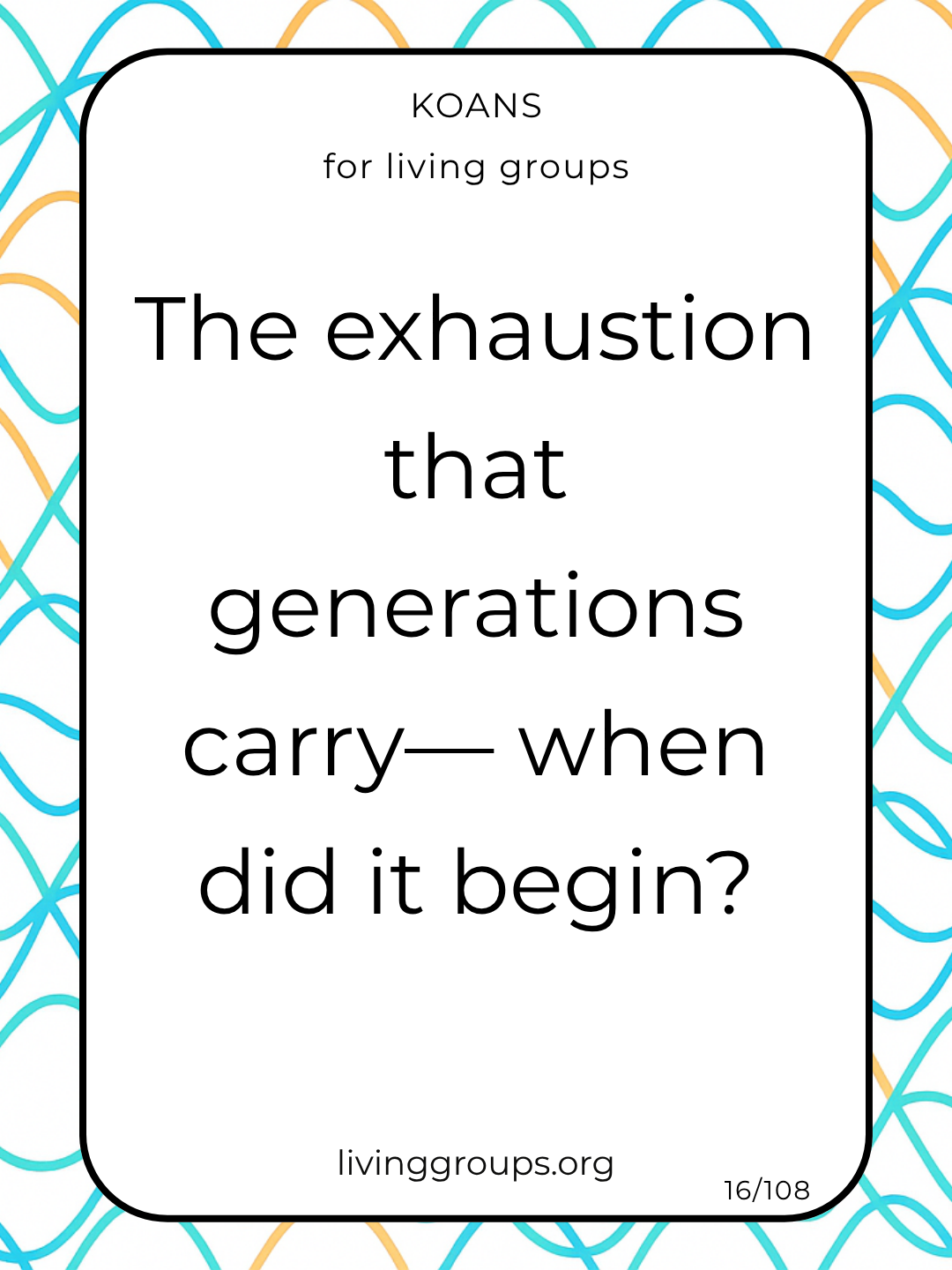
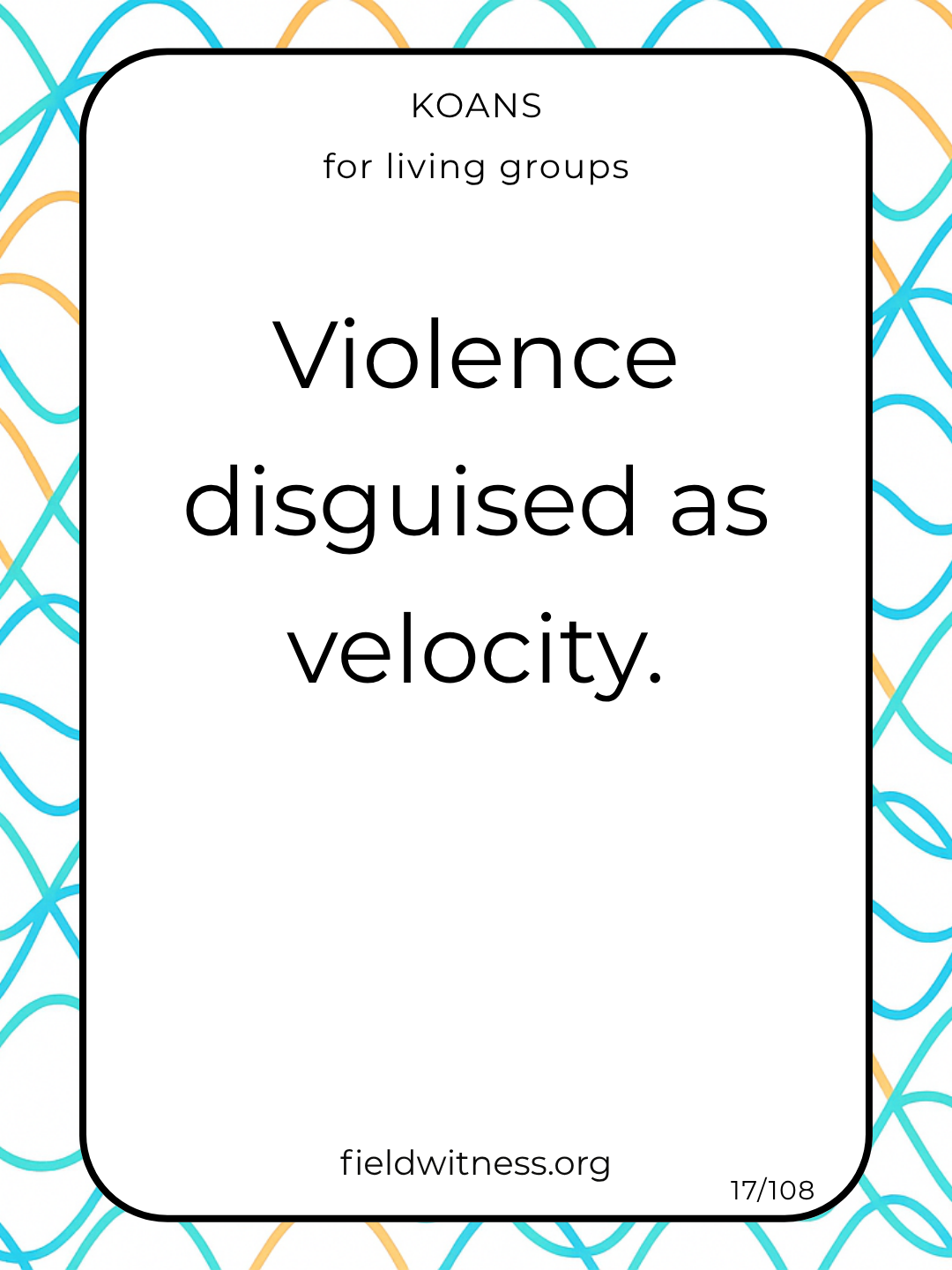
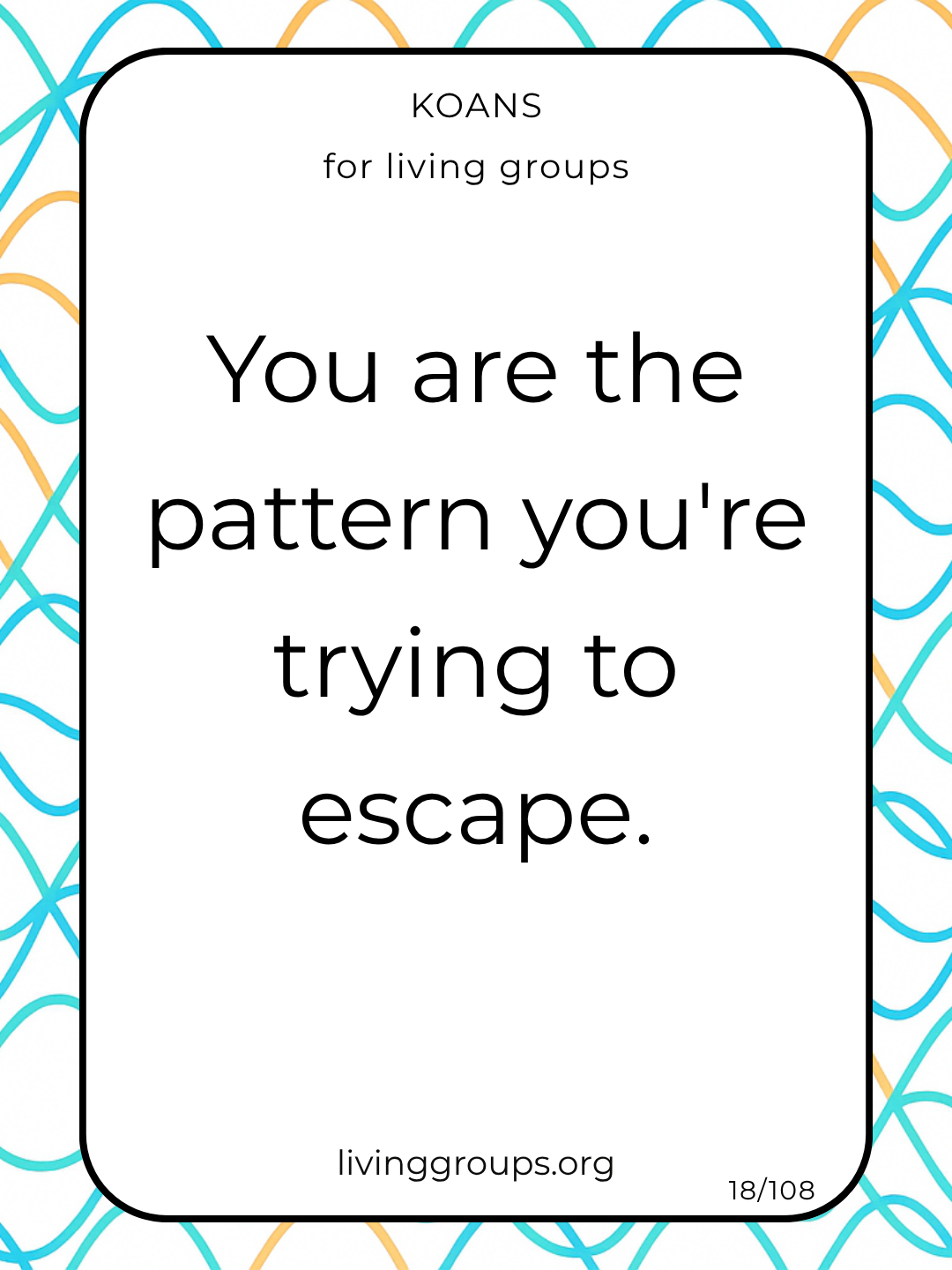
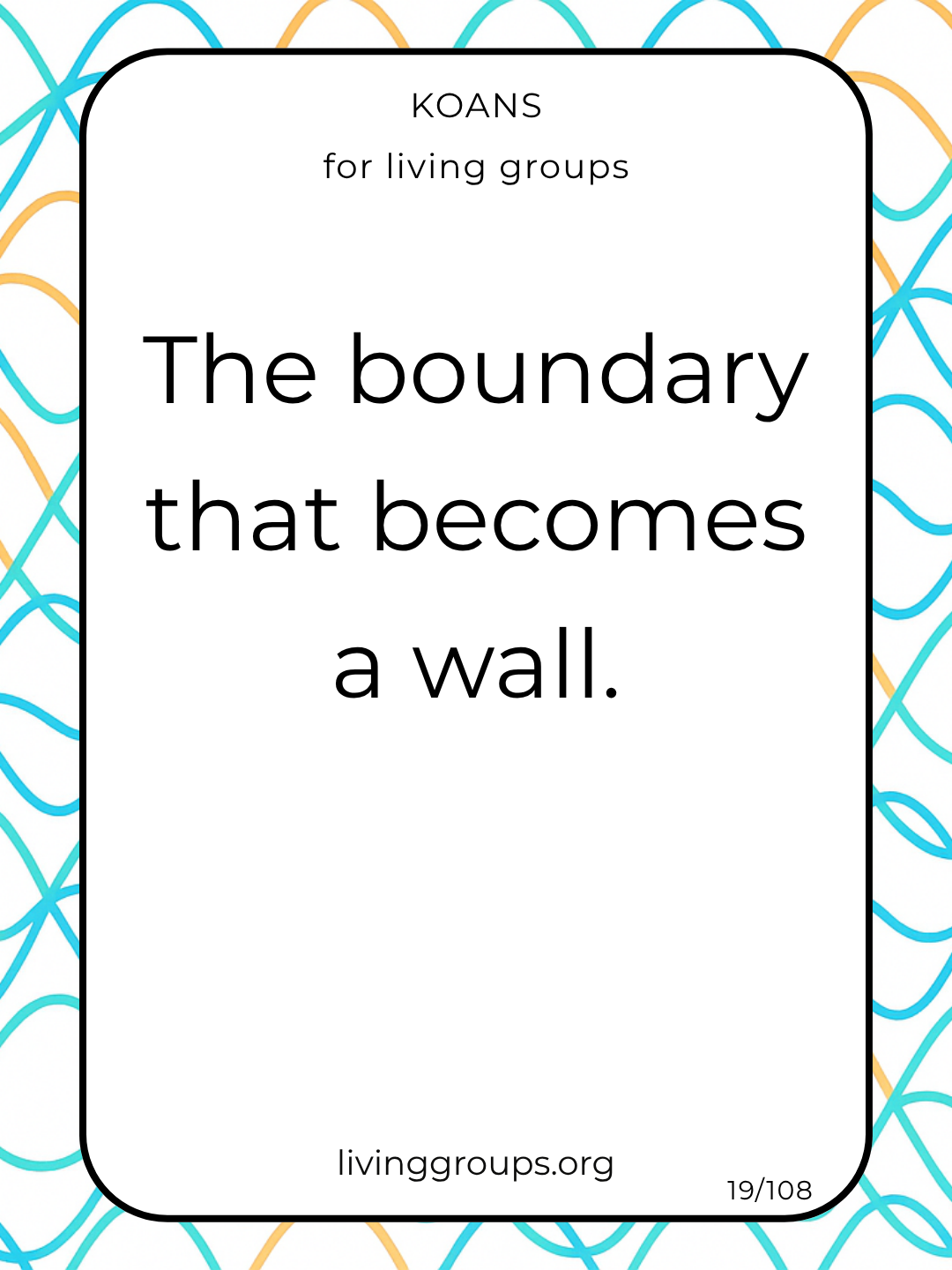
A koan is a compressed observation that cannot be resolved by thinking about it. It has to be sat with. It works on you sideways — through recognition rather than explanation.
These 108 koans are not aphorisms. Not affirmations. Not inspiration. They are field observations, drawn from twenty years of watching human groups struggle against their own architectures — gathered into a form that refuses to be dismissed quickly.
Each one is short enough to read in five seconds. Long enough to sit with for a week.
What They Do in Groups
The koans exist to be used in rooms where humans gather.
Pull one at the start of a meeting. Read it aloud. Let it sit. Notice what the room does with it.
What happens next is not predictable. Sometimes the koan names the exact dynamic the group is avoiding. Sometimes it cracks open a conversation the agenda had no room for. Sometimes it lands silently, and only later reveals what it was pointing toward.
The koans work because they refuse to diagnose. They do not tell the group what is wrong. They hand the group a mirror and step back. The group sees itself or it does not. Either is information.
In leadership cohorts, the koans serve as recognition objects — language for somatic knowings that had no words before. In team meetings, they function as pattern interrupts, breaking the room out of its usual register. In one-on-ones, they can open doors that direct questions would have slammed shut.
They are not tools in the conventional sense. They are invitations.
How to Use Them
There is no correct way. A few approaches that tend to serve:
Draw at random. The koan that finds you is the koan for today. Resist the urge to search for the "right" one.
Read aloud. The koans land differently when spoken into a room than when read silently on a page. The sound of the words matters.
Do not explain. The temptation to immediately interpret a koan — to say what it means or which team dynamic it points to — shuts down the work it could have done. Let it sit. Let the silence do its own teaching.
Carry it. A koan worth sitting with is a koan worth carrying for a day or a week. The recognitions often arrive hours after the reading.
Trust what the body does with it. The signal is not what you think about the koan. The signal is what shifts in your chest, what loosens in your shoulders, what becomes suddenly visible in the room after it lands.
The Deck
The full 108 koans are gathered as a companion practice object — KOANS for living groups, a physical deck designed for use in spaces where groups meet.
The books is for study. The deck is for practice. Both are modes of access to the same body of knowing.
The deck is in production and will be available through this website.
If you would like to be notified when it is ready, you can join the mailing list below.
Related Works
Each koan draws from the same field of observation that the trilogy articulates at length. If a koan finds you and you want more:
MOVEMENTS offers the geometric foundation underneath the patterns the koans point to.
ATTUNEMENT trains the perception capacity the koans activate.
RESONANCE names the axioms that the koans quietly operate from.